Building an MSME in Bengaluru: The Opportunities Most Founders Miss and the Traps Most Walk Into
Bengaluru has more MSME registrations per square kilometre than almost any other Indian city — and one of the highest closure rates within the first three years. Both facts are true, and together they tell you something important: this city rewards founders who read it correctly and punishes those who assume it works like everywhere else.
Bengaluru has more MSME registrations per square kilometre than almost any other Indian city. It also has one of the highest rates of MSME closure within the first three years. Both facts are true simultaneously, and together they tell you something important: this city is not simply a good place or a bad place to build a business. It is a city that rewards founders who understand what it actually is — and punishes those who assume it works like everywhere else.
As a business consultant in Bengaluru who has worked with founder-led businesses across manufacturing, SaaS, retail, and professional services here for over three decades, I have watched both dynamics play out many times. The founders who thrive are not always the ones with the best product or the most capital. They are the ones who read the city correctly.
This post is about what that reading looks like.
What Makes Bengaluru's MSME Ecosystem Genuinely Different
Most analyses of Bengaluru's business environment focus on the tech sector. That misses the point. The tech sector matters to MSMEs not because it is the sector they operate in, but because it shapes the city's demand patterns, talent pool, real estate market, and competitive dynamics in ways that are unlike any other Indian city.
Bengaluru has approximately 9.5 lakh registered MSMEs as of 2024, according to the MSME Ministry's Udyam portal data. Manufacturing remains the largest segment by count, but the fastest-growing segments are B2B services, logistics and supply chain, and what the government classifies as "other services" — a catch-all that includes everything from facility management to specialised consulting. These growth segments are, almost entirely, feeding into the corporate and tech ecosystem that Bengaluru has built over the last thirty years.
That is the first thing a founder needs to understand. Bengaluru's MSME economy is not self-contained. It runs, to an unusual degree, on the spending of large enterprises, multinational corporations, and well-funded startups. The city's B2B opportunity is real and substantial. So is the exposure that creates.
The Opportunity Layer Most MSME Founders Never Reach
The single biggest opportunity that Bengaluru offers MSMEs — and the one most founders undersell themselves out of — is access to enterprise and startup clients who pay better, pay faster, and buy at higher volumes than almost any other client base in India.
A packaging supplier in Pune serves FMCG companies and local retailers. A packaging supplier in Bengaluru can serve Bengaluru's 5,000+ active startups, the campuses of Infosys, Wipro, and TCS, the 500+ MNCs with registered offices here, and the growing food and beverage sector that caters to a young, high-income urban population. The market is not just larger — it is structurally willing to pay a premium for reliability, quality, and professional service delivery.
The trap is that accessing this market requires a level of commercial professionalism that many MSMEs are not ready for. Enterprise procurement teams have vendor registration processes, payment terms that run to 60–90 days, and quality requirements that a business built on informal relationships cannot easily meet. The founders who capture the Bengaluru B2B opportunity are the ones who invest in systems — proper invoicing, documentation, quality certifications, and basic digital presence — before they need them.
The opportunity is there. The question is whether your business is ready to claim it. As a business mentor for founders in India, this is often the first conversation I have with Bengaluru-based MSME founders: the market is already in front of you. Are you operationally ready to sell to it?
Why Bengaluru's Talent Pool Becomes a Liability for Unprepared MSME Founders
Bengaluru has India's deepest talent pool outside of Mumbai for certain professional categories — finance, tech, marketing, design, operations. For an MSME founder, this sounds like an unambiguous advantage. It is, but only if you understand the dynamics that come with it.
The first dynamic is attrition. Bengaluru's talent market is hyper-competitive. A skilled accountant, a good operations manager, or a capable salesperson in this city has more options than anywhere else in India. Retention requires not just competitive pay but genuine career development, a functioning workplace culture, and some sense that the business is going somewhere. MSMEs that treat hiring as a transaction — fill the seat, pay the minimum, move on — find themselves in a permanent cycle of recruitment and training that consumes more management time than the role ever produces in value.
The second dynamic is expectation mismatch. Bengaluru's talent pool is shaped by the expectations set by the tech sector. Employees who have worked at or near tech companies come with assumptions about working hours, management styles, feedback culture, and workplace infrastructure that are not always realistic for a 30-person manufacturing or distribution business. Neither side is wrong. But the mismatch, if it is not managed, creates friction that slows everything down.
The founders who get this right treat talent strategy as a distinct management discipline, not an afterthought. They define clearly what kind of business they are and what kind of career they can offer — and they hire for fit with that reality, not for proximity to what the tech sector has normalised.
The Cost and Infrastructure Traps That Catch Bengaluru Founders Off-Guard
Bengaluru is expensive in ways that are not always visible until you are inside the business. Commercial real estate in central Bengaluru and the key corridors — Whitefield, Electronic City, Hebbal — has appreciated significantly over the last decade, driven by corporate demand. An MSME founder who locks in a long lease on premises in one of these locations may find that occupancy costs consume a disproportionate share of revenue relative to what the same space would cost in Hyderabad, Pune, or Chennai.
The infrastructure constraint is more serious. Bengaluru's road network is under chronic pressure, and logistics costs — both in time and money — for businesses that depend on physical movement of goods are meaningfully higher than in cities with better road infrastructure or more accessible industrial zones. A distributor or manufacturer whose business model assumes fast, predictable last-mile delivery needs to build that constraint into its unit economics, not discover it after signing a lease.
There is also what I call Bengaluru's "pilot city" syndrome. Because the city has a large, educated, English-speaking consumer base willing to try new things, many national and multinational companies use Bengaluru as a test market before rolling out nationally. For an MSME that has built its business on the distribution contract or supplier relationship that a large company brought to the city, the risk is real: what the large company pilots in Bengaluru, it may eventually centralise, discontinue, or bring in-house. MSMEs that are dependent on one or two such relationships without building independent demand are exposed.
The Counter-Argument: "A Good Business Works Anywhere"
There is a reasonable objection to everything I have argued above. It goes like this: a well-run business with a strong product and good unit economics will succeed in Bengaluru, Mumbai, Coimbatore, or Patna. Cities do not determine outcomes. Execution does.
This is largely true, and I do not want to overstate the city-specific argument. The fundamentals of business — margin management, customer concentration risk, talent retention, operational systems — matter everywhere. A founder who ignores those fundamentals will fail in Bengaluru just as surely as anywhere else, and for the same reasons.
Where the city-specific argument holds is at the margin. Bengaluru amplifies both the upside and the downside. The B2B opportunity is genuinely larger here. The talent dynamics are genuinely more complex here. The cost structure is genuinely more demanding here. A business that would survive a casual approach in a slower-moving city may not survive the same approach in Bengaluru — not because the city is hostile, but because the stakes are higher and the competition is faster.
Understanding the city does not replace understanding business. But for a founder building here, it is one more variable that deserves deliberate attention.
What It Actually Takes to Build in Bengaluru
Bengaluru rewards a specific kind of founder: one who is commercially ambitious enough to go after the enterprise and startup market, operationally disciplined enough to meet the standards that market requires, and self-aware enough to build a talent culture that retains people in a city full of options.
It punishes a different kind: the founder who mistakes the city's energy for momentum in their own business, who over-extends on real estate or headcount based on optimism rather than contracts, or who builds their entire revenue on one large client relationship without asking what happens if that client changes strategy.
The opportunities in Bengaluru's MSME ecosystem are real and substantial. So are the traps. The difference between a founder who captures the first and avoids the second is rarely talent or luck. It is almost always clarity — about what the city is, what the business is, and what it will take to make them fit together.
If you are building in Bengaluru and want to work through that clarity, that is exactly the kind of conversation Simpleworks Consulting exists for.
About Prem Menon
Prem Menon is the founder of Simpleworks Consulting, working with MSME founders and growth-stage businesses across India to turn strategy into execution. With experience spanning manufacturing, SaaS, retail, and professional services, Prem brings a practitioner's eye to the problems most consultants only theorise about.
Building in Bengaluru and ready to think it through?
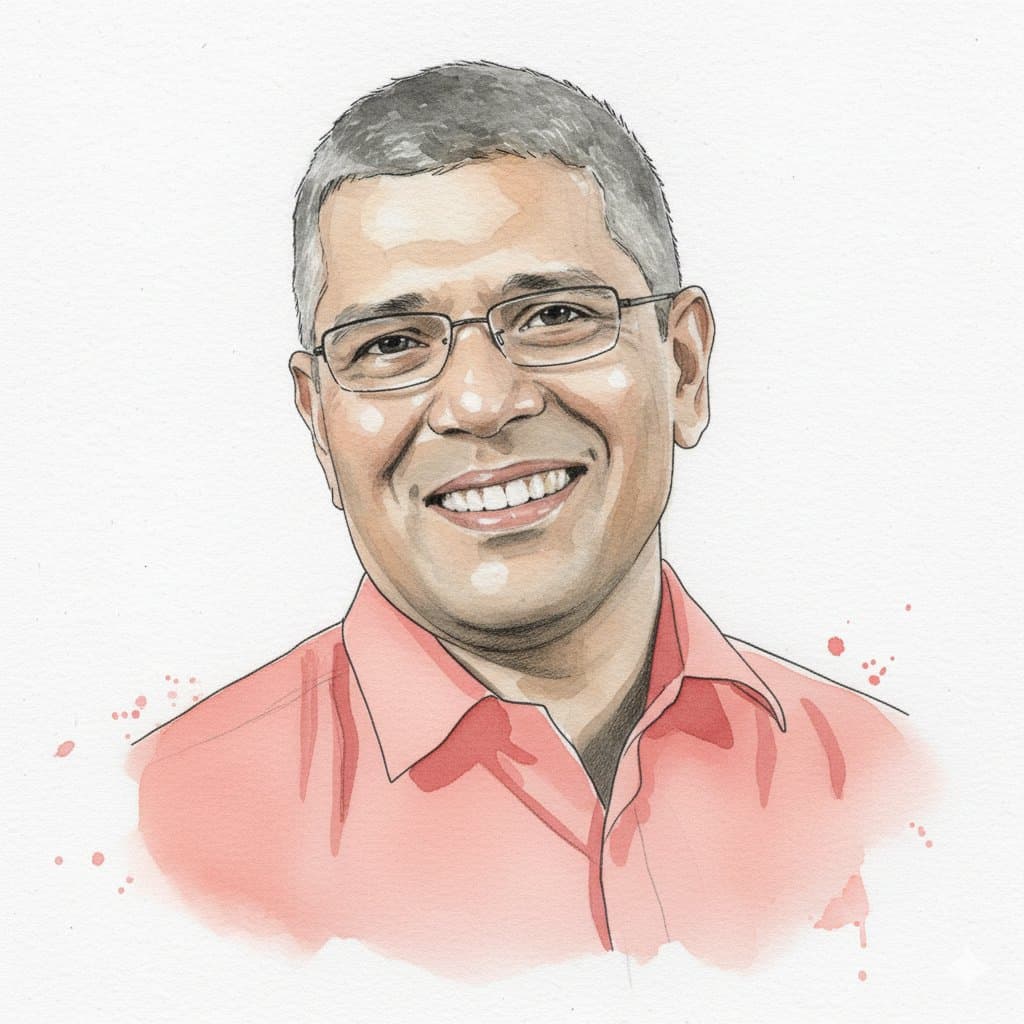
Prem Menon
Founder, Simpleworks Consulting. 39 years across Telecom, Automotive and Consumer Durables — now helping Indian MSME and family-business founders grow with clarity.